The primary mission of student life services at French schools is to ensure the well-being of students and the smooth operation of the school outside of class hours. These services manage the organization of students’ daily lives, ensure their safety, and supervise recess, lunch, and study periods. Its responsibilities also include tracking attendance and absences, managing relationships with families, and supporting students in their integration and academic success.
Our Vitacura and Chamisero campuses earnedLevel 1 of the French “EFE3D” certification,which is awarded by the AEFE to French schools abroad committed to aGlobal Approach to Sustainable Development.
This level, knownas “Commitment,” recognizes our school’s progress in integrating sustainable development into our educational practices and the overall operations of our campuses.
To promote a culture of sustainability within our school community.
Identify the main sources of emissions and work toward their gradual reduction.
To inspire our students to be agents of change in the face of climate challenges.
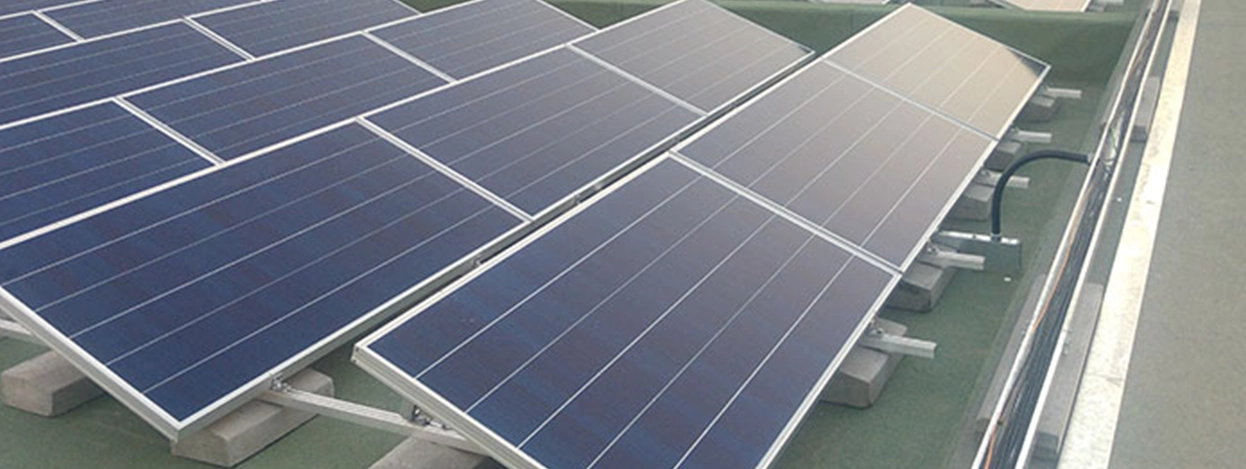
The school has a photovoltaic solar panel system installed at its two campuses, Vitacura and Chamisero, consisting of 600 solar modules. At the time of its inauguration in April 2017, it was the largest photovoltaic solar roof at an educational institution in Chile.
The system was installed by the French company Total – Nuevas Energías Chile with a 25-year warranty.
Beyond its economic benefits, this initiative is part of our educational program aimed at fostering social and environmental responsibility among our students.
Total Installed Capacity
Chamisero Campus Power
SunPower solar panels at the Chemisero headquarters, each rated at 330 Wp
Panels at the Vitacura facility, with the remaining capacity needed to reach the total of 200 kWp.
Solar energy is a clean source that does not emit greenhouse gases (such as CO2), directly contributing to the fight against climate change. By generating nearly 2,000 MWh of clean, renewable energy, the school has avoided burning fossil fuels, reducing its carbon footprint and helping to improve local air quality.
The facility serves as a tangible example of sustainability and environmental responsibility in action, offering students the opportunity to learn about renewable energy and energy efficiency through real-world examples. This reinforces the school’s identity as an institution committed to sustainable development and innovation.
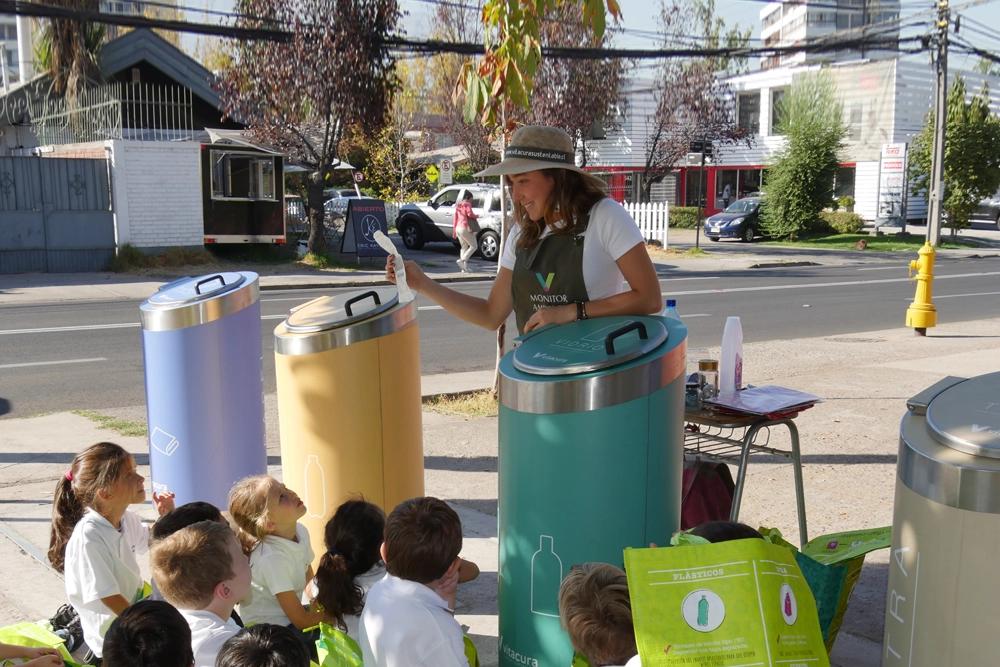
in preschool, elementary, and middle school at both campuses. In the case of Vitacura, we have received support from the municipality.
in which elementary and middle school students turn waste from the cafeteria into compost through anaerobic fermentation.
where students of all levels practice sustainable farming, gardening, and teamwork while connecting with nature.
which took place June 9–13, 2025, in Nice, France, with the aim of “Accelerating action and mobilizing all stakeholders to conserve and sustainably use the oceans.” A group of 12 students from the school—ranging from 5th grade to 12th grade—who were selected through a contest based on the quality of their environmental proposals, participated in various activities held as part of this event.
On September 26, 2025, the Alianza Francesa school launched the “A Reel for the Oceans” contest, sponsored by the Ministry of the Environment, aimed at students ages 13 and older from all schools across the country. Participants must create a “Reel” no longer than one minute, to be shared on social media, showcasing individual, family, or community actions that help reduce the amount of plastic entering the oceans and seas. The winning “Reels” will receive funding to implement the proposed projects.
A group of five students, accompanied by two teachers, will attend COP30, which will take place this year from November 10 to 21 in Belém, Brazil. The students will participate in activities held in the Green Zone—a space dedicated to civil society—where they will meet with politicians and officials from Brazil and Chile, as well as representatives from NGOs. Our school was invited to participate in this event because, three years ago, we joined the Global Youth Pact for Climate Change, an international project that seeks to give young people a voice in the debate on climate change, promoted within the framework of the COP conferences. This pact, launched in 2014 during COP21, brings together high school students to propose concrete actions and plans at the global, regional, and local levels. In this context, our students will have the opportunity to exchange experiences with 120 students from schools around the world who will be attending COP30.